Introduction
Vehicle insurance can seem confusing if you are new to it. There are different types of coverage, policies, and technical terms that can make it difficult to understand at first.
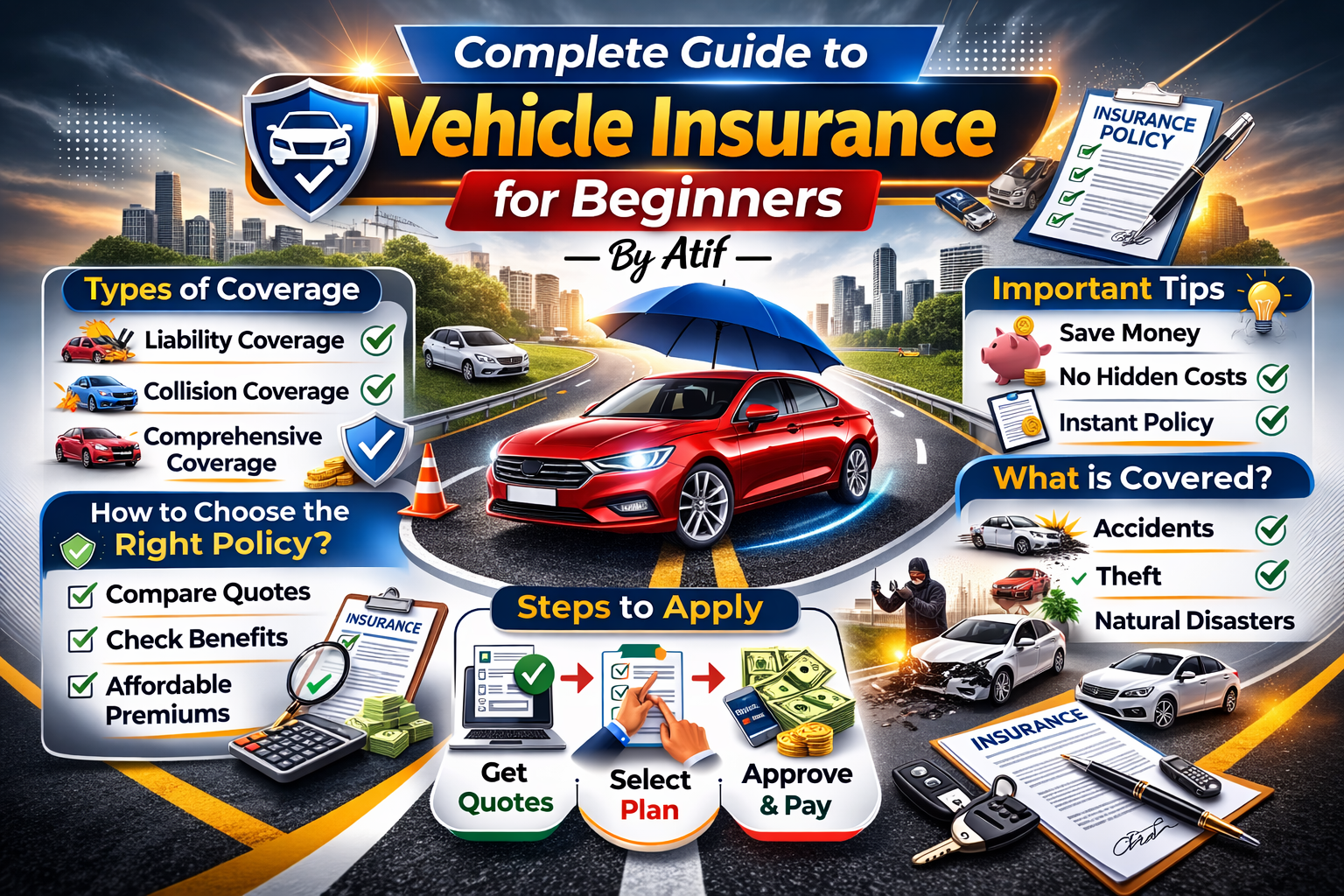
In this guide, Atif explains vehicle insurance for beginners in a simple and practical way so you can easily understand how it works and what to choose. Whether you own a car, motorcycle, or truck, having the right insurance is essential for financial protection.
What Is Vehicle Insurance?
Vehicle insurance is an agreement between you and an insurance company.
You pay a regular amount called a premium, and in return, the company agrees to cover your financial losses in case of:
- Accidents
- Theft
- Fire
- Natural disasters
This helps protect you from large unexpected expenses.
Why Vehicle Insurance Is Important
Vehicle insurance is important for several reasons.
Financial Protection
Repair costs and medical bills after an accident can be very high.
Legal Requirement
In many places, having basic vehicle insurance is mandatory.
Protection Against Damage
Insurance covers damages to your vehicle and others.
Peace of Mind
You can drive confidently knowing you are protected.
Types of Vehicle Insurance Coverage
Understanding coverage types is essential before choosing a policy.
Liability Insurance
This covers damage or injury you cause to others.
Collision Insurance
This covers damage to your own vehicle after an accident.
Comprehensive Insurance
This covers non-accident damages such as:
- Theft
- Fire
- Natural disasters
Personal Injury Protection (PIP)
This covers medical expenses for you and your passengers.
Uninsured Motorist Coverage
This protects you if the other driver does not have insurance.
How Vehicle Insurance Works
The process of vehicle insurance is simple.
- You purchase a policy
- You pay premiums regularly
- Your vehicle is covered
- If an accident happens, you file a claim
- The insurance company pays according to the policy
Factors That Affect Insurance Cost
Insurance premiums depend on several factors.
Driving History
Safe drivers usually pay lower premiums.
Age
Young drivers often pay more due to higher risk.
Vehicle Type
Expensive or high-performance vehicles cost more to insure.
Location
Busy areas with more traffic usually have higher premiums.
Coverage Level
More coverage means higher premium costs.
Tips for Beginners
Here are some useful tips to help you choose the right policy.
Compare Multiple Quotes
Always compare different insurance companies before buying.
Start with Basic Coverage
Beginners should start with essential coverage and upgrade later.
Choose the Right Deductible
A higher deductible can reduce your premium.
Avoid Unnecessary Add-Ons
Only pay for coverage you actually need.
Read Policy Terms Carefully
Always understand what is included and excluded.
Common Mistakes to Avoid
Avoid these common mistakes when buying insurance:
- Choosing the cheapest policy only
- Not understanding coverage details
- Ignoring the claim process
- Not comparing different providers
Best Insurance Companies for Beginners
Some popular and beginner-friendly insurance companies include:
- GEICO
- State Farm
- Progressive
- Nationwide
These companies are known for easy policies and reliable service.
Future of Vehicle Insurance
Vehicle insurance is evolving with new technology.
Telematics Insurance
Premiums based on driving behavior.
AI-Based Claims
Faster and more efficient claim processing.
Electric Vehicle Coverage
Special policies for electric vehicles.
Conclusion
Understanding vehicle insurance is the first step toward making smart financial decisions. With the right knowledge, you can choose a policy that provides strong protection without overpaying.
As Atif recommends, beginners should focus on understanding the basics, comparing options, and selecting coverage that fits their needs. This approach ensures both affordability and complete protection on the road.